計算科学研究センター(CCS)に所属する教員・研究員の研究をわかりやすく紹介する「研究者に聞くー研究トピックス」に「vol.22 第一原理計算で探る鉄より重い元素の謎 」を公開しました。
原子核物理研究部門の宮城 宇志助教の研究を紹介しています。
計算科学研究センター(CCS)に所属する教員・研究員の研究をわかりやすく紹介する「研究者に聞くー研究トピックス」に「vol.22 第一原理計算で探る鉄より重い元素の謎 」を公開しました。
原子核物理研究部門の宮城 宇志助教の研究を紹介しています。
宮城 宇志 助教
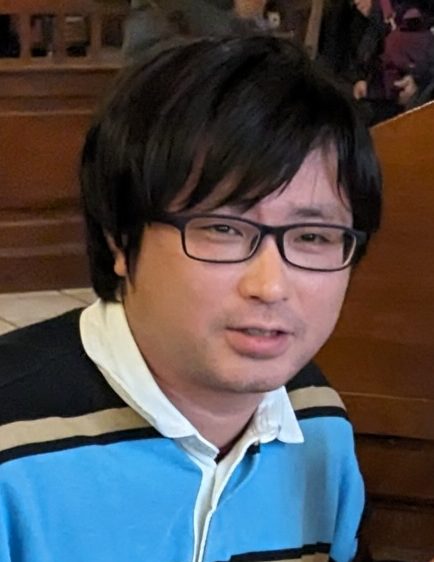
原子核物理研究部門
鉄よりも原子番号が小さい(軽い)元素は、宇宙の恒星内部という超高温高圧な環境において作られたというのが現在の見解です。しかし、鉄よりも原子番号が大きい(重い)、かつ自然界に普通に存在するような元素(ウランや鉛など)に関しては、その起源が未だによく分かっていません。宮城先生は、このような鉄よりも重い元素の形成過程を第一原理計算(*1)によって研究している、原子核物理学分野の理論研究者です。
(2026.4.27 公開)
鉄より重い元素の起源については、中性子がたくさんある環境(*2)で作られるという仮説があります。そこでは原子核に中性子が次々と結合していき、いったん中性子が過剰な原子核になった後にベータ崩壊(*3)が始まり、最終的に中性子数や陽子数(原子番号)が魔法数(*4)となるような、鉄より重い安定な元素が形成されると考えられています。この仮説を検証するには、ベータ崩壊を起こすのに必要なエネルギーや、ベータ崩壊の半減期(*5)を求めることが重要ですが、そのためには加速器による実験や高精度な計算が必要となります。
しかし、中性子がたくさんある環境を用意することはとても難しく、また陽子数Zよりも中性子数Nの方が大きい原子核になるほど、実験で作ることが困難となります(特に質量数(Z + N)が小さい領域ではN/Zが1に近いほど天然に存在しやすい)。そのような原子核は実験値がないものが多く、実験値がある原子核から得られた知見を応用して経験的なモデルを構築することで補われてきました。しかし、実験値がない原子核では異なる理論モデルを使うと結果が同じにならず、 “何を信じればよいか分からない” という状況が起きていました。宮城先生は、「このような理論の不定性を評価するには第一原理計算が必要だ」と考え、特に実験が難しい、鉄より重く、中性子が過剰な原子核について第一原理計算を行うことで、ベータ崩壊のエネルギーや半減期の理論値を導出するという研究を行っています。
原子核は陽子や中性子という多数の核子から成り立っています。そのふるまいを正確に記述するためには、「量子多体問題」を解く必要があります。しかしこれを素直に解こうとすると、鉄より軽い元素でさえ、現在のスーパーコンピュータが扱える行列計算の限界(1010-1012次元)を超える巨大なハミルトニアン(*6)の行列計算が必要です。鉄より重い元素では問題はさらに大きくなり、巨大な行列を対角化(*7)して力尽くで解く方法は現実的ではありません。そこで、既存の力尽くの対角化計算では配位を考える空間がそもそも大きすぎると考えた宮城先生は、それを何とか小さくしようと次のように考えました。
「原子核の深いところ(コア)にある核子は強い核力によって束縛されているため、より高エネルギーな外側の軌道に遷移する可能性は低い。さらに、低エネルギー状態の原子核とは関係ないほど外側のかなり高エネルギーな軌道にある核子(その他)も重要ではない。つまり、原子核の状態を記述するにあたって本質的に重要なのは、バレンスと呼ばれる軌道にある核子の状態のみになる(図1)。」
このアイディアが元となり、宮城先生は相似くりこみ群法(Valence-space In-medium similarity renormalization group, VS-IMSRG)という近似の方法について研究しています。この考え方に基づいて近似的なユニタリ変換(*8)を構築することで、膨大なハミルトニアンの次元を減らし、計算可能な次元数のハミルトニアンの行列を新たに生成できます(図1)。この新たなハミルトニアンの行列は固有値が少なくなるため、元のハミルトニアンの行列と完全に等価ではありません。そこで、他の計算手法や一部の存在している実験値と比較したところ、基底状態付近の原子核の状態については、宮城先生の提案手法と、その他の手法や実験値で結果が一致することがわかりました(図2)。鉄より重い元素を扱う際にも、基底状態付近の原子核に着目します。そのため、この提案手法が鉄より重い元素の起源を検証する際にも有効であることが期待できます。
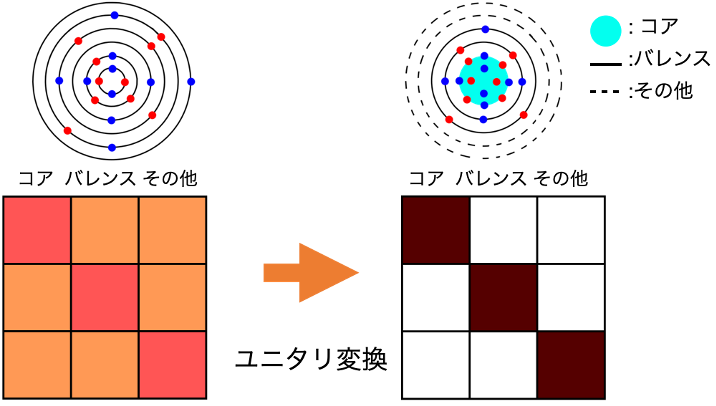 図1. 相似くりこみ群法の模式図。通常の解き方(左側)では、「コア」、「バレンス」、「その他」をすべて考慮して直接対角化をする必要がありこれは大変である。相似くりこみ群の方法(右側)では近似的なユニタリ変換でバレンス以外を分離して、バレンスの中だけで対角化を実行できる。
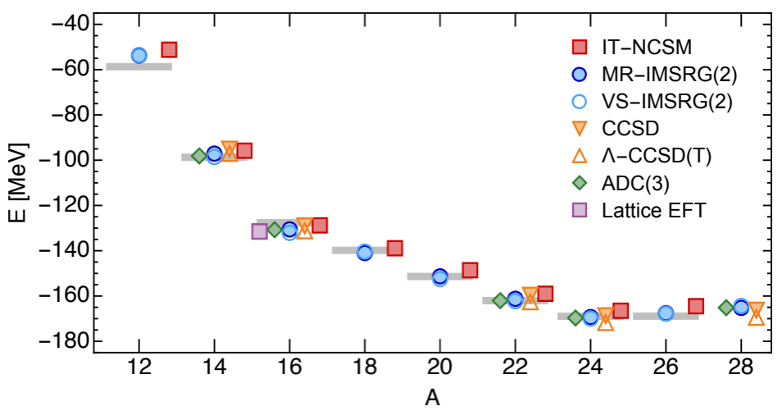
図2. 酸素同位体の基底状態エネルギー。横軸が質量数(A=Z+N)、縦軸が基底状態エネルギー。バーが実験値、それぞれのシンボルは、量子多体問題の各計算手法による結果を表す。バーと全てのシンボルが大体一致していることから、宮城先生が用いるVS-IMSRGを含め、どの計算方法でも問題をそれなりに正確に解けていることが分かる。H. Hergert, Front. Phys. 8, (2020)より引用。
図3は、相似くりこみ群法による中性子過剰な原子核のベータ崩壊の半減期の計算結果を示しています。赤のシンボルは、青のシンボルの計算に最近重要だと分かった成分を加えて計算した結果ですが、青よりも2倍程度半減期が伸びて、より実験値(白い四角のシンボル)に近くなったことが分かります。一方、紫のシンボルは赤の結果と少し異なっています。紫は赤とは別の核力パラメータセットによる結果で、行っている計算自体は同じなので、第一原理計算の枠組みが正しければ紫と赤は一致してほしかったところです。紫と赤にズレがあるということは、核力の不定性を過大評価していそうであり、ベータ崩壊を記述するのにより適した核力を探していく必要があるかもしれません。
この研究はドイツのダルムシュタット工科大学との共同で行われました。また、数値計算には筑波大学計算科学研究センターのスーパーコンピュータも使用されました。
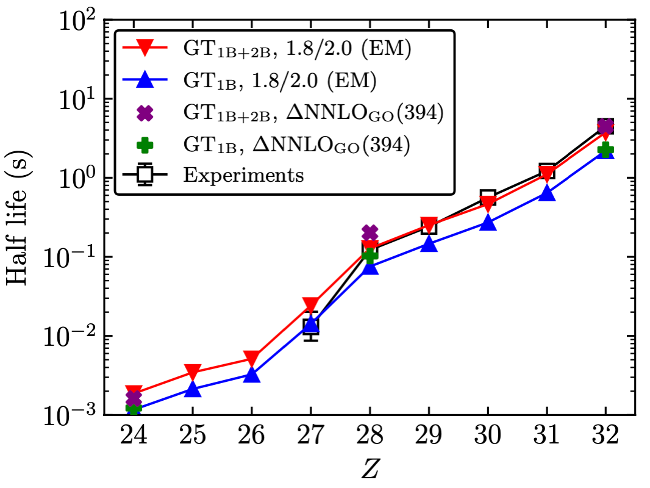 図3. 中性子数を固定した際(N = 50)の、陽子数Z(横軸)ごとのベータ崩壊の半減期の計算結果。Experiments が実験値、それ以外のシンボルが相似くりこみ群法で計算した際の理論値。Z. Li, T. Miyagi, and A. Schwenk, arXiv:2509.06812 (accepted in Phys. Rev. Lett.)より引用。
原子核の形成メカニズムの解明は、自然界の成り立ちを追求する自然科学においてはもちろんのこと、社会的にも重要です。例えば、エネルギー確保の新たな選択肢として核融合発電が期待されていますが、核融合の基礎研究には原子核物理の知見が不可欠です。また、原子力発電所から生み出される放射性廃棄物は、鉄より重い元素です。放射性廃棄物の処理に必要な技術開発においても、このような基礎研究が活用されます。他にも、原子番号が100を超えるような重い原子において、希ガスのような安定な原子が存在するかを理解することは、化学にも関わってきます。さらに、現在急速に発達している量子コンピュータの分野では、自由度が多く難しい原子核物理の現象を解くことが、性能テストや性能のベンチマークとして考えられています。このように、原子核物理学分野の研究は、元素や宇宙の成り立ちを理解するだけのものではありません。エネルギー問題や新しい計算技術など、さまざまな分野の発展にもつながる可能性を秘めています。原子核の世界を探る研究は、未来の科学や技術を切り開く手がかりにもなっているのです。
(文・広報サポーター 山口未沙)
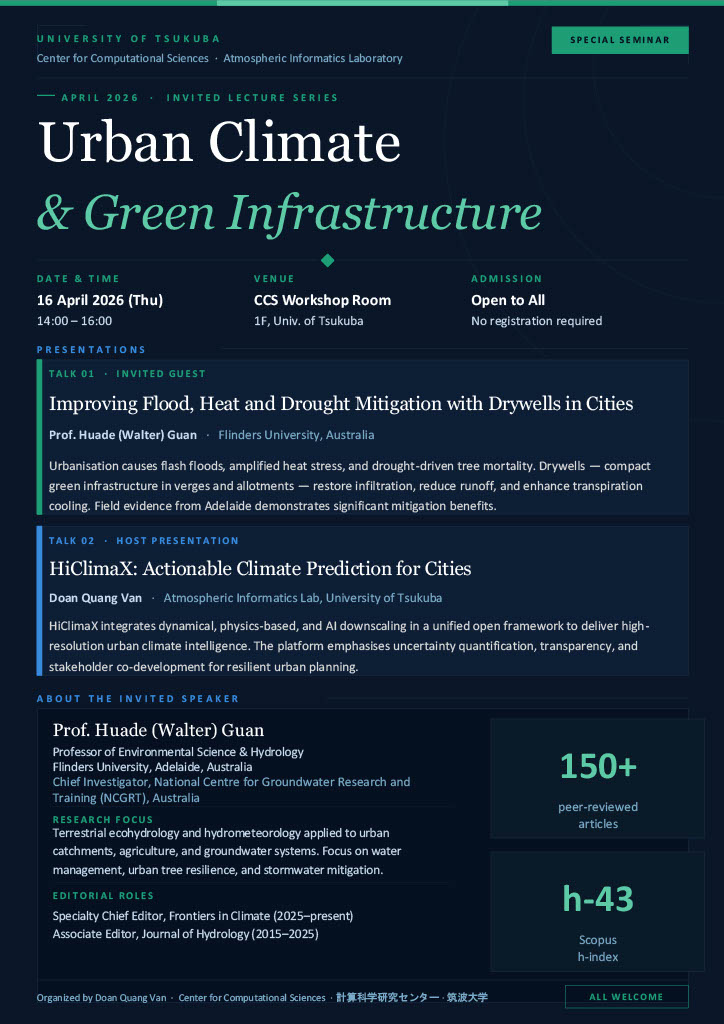
第157回計算科学コロキウムを開催いたします。多数のご来聴をお待ちしております。
世話人: Doan Quang Van
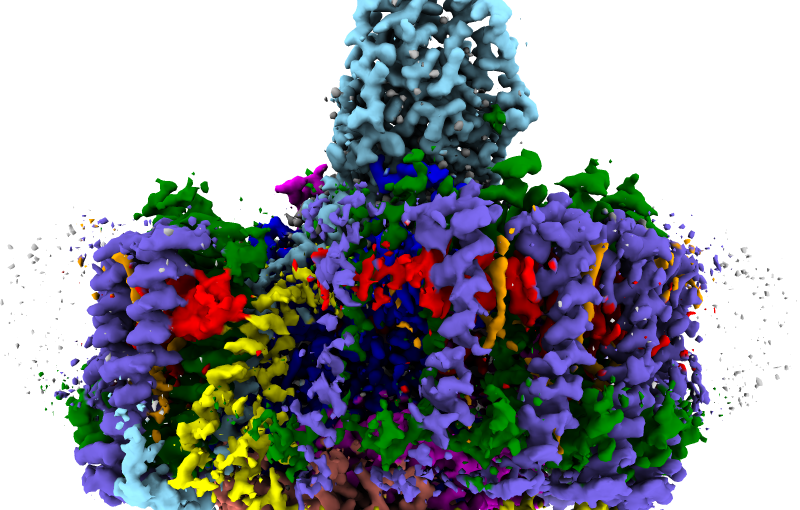
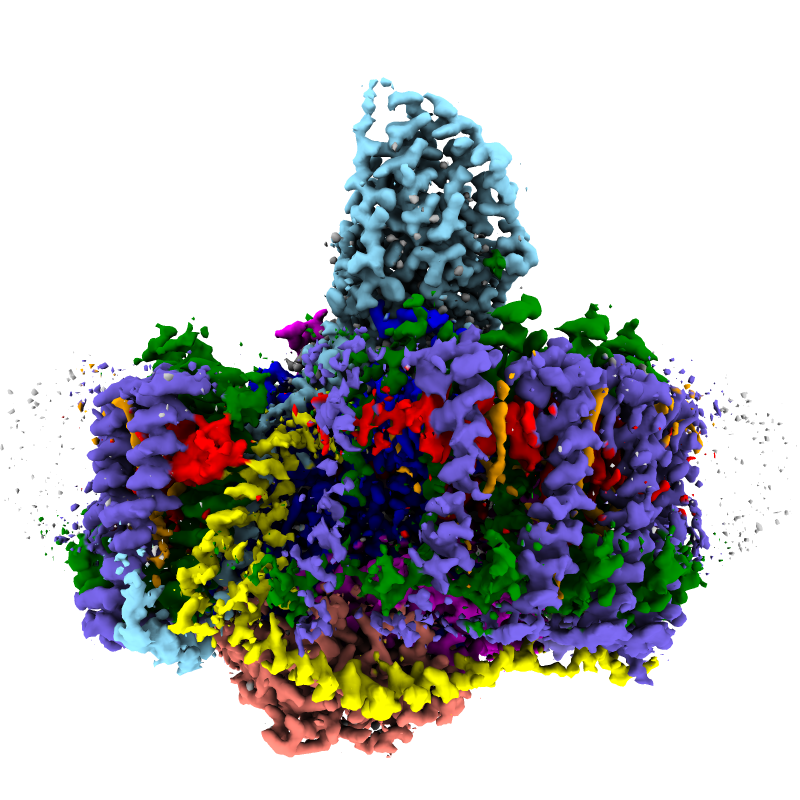
Oxygen is generally harmful to many photosynthetic bacteria; however, certain marine purple nonsulfur bacteria can grow even under oxic conditions. Researchers at University of Tsukuba used cryo-electron microscopy to visualize the structure of the protein complex responsible for photosynthesis in one such bacterium, Rhodovulum sulfidophilum. Their analysis uncovered a previously unrecognized membrane protein and revealed structural features that could explain how this organism achieves efficient energy conversion despite the presence of oxygen.
Tsukuba, Japan—Photosynthetic bacteria do not release oxygen during photosynthesis but can convert solar energy into chemical energy with remarkably high efficiency. They also utilize near-infrared light—wavelengths unused by plants—and thrive in diverse environments, including freshwater, seawater, and hot springs. Among these organisms, the marine purple nonsulfur bacterium Rhodovulum sulfidophilum is a model species notable for its strong tolerance to oxygen. However, the molecular mechanism by which its light-harvesting and energy-converting LH1-RC complex maintains highly efficient photosynthesis under oxic conditions remains unclear.
In this study, the researchers determined the structure of the LH1-RC complex at an exceptionally high resolution of 1.8 Å using cryo-EM. Their analysis identified a previously unknown membrane protein called protein‑3h, which is located within the LH1 opening. They further discovered a non-heme Fe ion positioned near the triheme cytochrome subunit, which is coordinated by a histidine residue and water molecules rather than by heme. This configuration indicates that the Fe ion might act as an intermediary site for electron transfer.
These findings provide deeper insight into the photosynthetic complex in R. sulfidophilum and could contribute to future applications, such as genetically engineered phototrophic systems and environmentally relevant technologies, including the bioremediation of hydrogen sulfide-containing wastewater.
###
This research was partially supported by the National Key R&D Program of China (No. 2022YFC3401800), Platform Project for Supporting Drug Discovery and Life Science Research (Basis for Supporting Innovative Drug Discovery and Life Science Research (BINDS)) from AMED under Grant Numbers JP21am0101118 and JP21am0101116, and JP23ama121004. R.K., E.R.P., T. M. and B.M.H. acknowledge the generous supports of Dr. Malgorzata Hall, the Okinawa Institute of Science and Technology (OIST), Scientific Computing & Data Analysis Section and Scientific Imaging Section at OIST and the Japanese Cabinet Office. R.K. acknowledges the support from Prof. Tsumoru Shintake. M.T.M. was supported in part by NASA Cooperative Agreement 80NSSC21M0355. This work was supported in part by JSPS KAKENHI (Grant Numbers 22K06111, 23K05822, 24H02084, 24K01620 and 24H02078), Center for Quantum and Information Life Sciences, University of Tsukuba, and MEXT Joint Usage/Research Promotion Project: CURE JPMXP1323015488 (Spin-L program No spin25XN018).
Professor TANI Kazutoshi
Center for Computational Sciences, University of Tsukuba
Professor Zheng-Yu Wang-Otomo
Faculty of Science, Ibaraki University
Professor KIMURA Yukihiro
Department of Agrobioscience, Graduate School of Agriculture, Kobe University
Associate Professor MINO Hiroyuki
Department of Physics, Graduate School of Science, Nagoya University
Section Leader MOCHIZUKI Toshiaki
Scientific Imaging Section, Core Facilities, Okinawa Institute of Science and Technology Graduate University (OIST)
Date: March 11th (Wed) – 12th (Thu), 2026
Venue: EPCC, the University of Edinburgh
| DAY 1 | Teaching Room 13,Teviot Medical School | |
| start | Speaker | Title |
| 9:30 | Coffee, welcome and introduction | |
| 10:00 | Yoshinari Kameda | Computational Vision Media for Real-World Computational Imformatics |
| 10:30 | Mark Parsons | EPCC update |
| 11:00 | Miwako Tsuji | Quantum HPC Hybrid Platform in Japan |
| 11:30 | Coffee | |
| 12:00 | Oliver Brown | Quantum Software Lab |
| 12:30 | Hiroyasu Koizumi | Quantum Computing for Natural Language Processing and Sentiment Analysis |
| 13:00 | Lunch | |
| 14:00 | Jano Van Hemert | Edinburgh International Date Facility:flexible storage and compute services for AI and date science |
| 14:30 | Taisuke Boku | Changing Lanes – GPU Computing for HPC/AI and Governmental Support in Japan |
| 15:00 | Julien Sindt | Preserving large-scale geospatial datasets |
| 15:30 | Coffee | |
| 16:00 | Yasuteru Shigeta | Integrated Drug discovery using simulation and machine learning |
| 16:30 | Joe O’Connor | Machine Learning for Smoothed Particle Hydrodynamics |
| 16:45 | Adrian Jackson | Optimizing storage with compiler technologies |
| 17:00 | Close | |
| DAY 2 | Lecture Theatre 3, 40 George Square | |
| start | Speaker | Title |
| 9:00 | Nick Brown | Programmer productivity and performance when using AI accelerators for HPC |
| 9:30 | Ho Hsiao | A Machine Learning Approach for Lattice Gauge Fixing |
| 10:00 | Elia Cellini | Neural and Non-Equilibrium methods for Lattice Gauge Theory |
| 10:30 | Dr.Shu Horie | Estimating the Star Formation History of Galaxies Using Diffusion Models |
| 11:00 | Coffee | |
| 11:30 | Jindra Gensior | The impact of different star formation models on galaxy evolution across cosmic time |
| 12:00 | Paul Batholomew | VECTA and CSS |
| 12:30 | Closing remarks and future plans | |
| 13:00 | Lunch | |
| 14:00 | Visit to EPCC Data Center | |
| 16:30 | Close | |
2026年3月27日
筑波大学計算科学研究センター
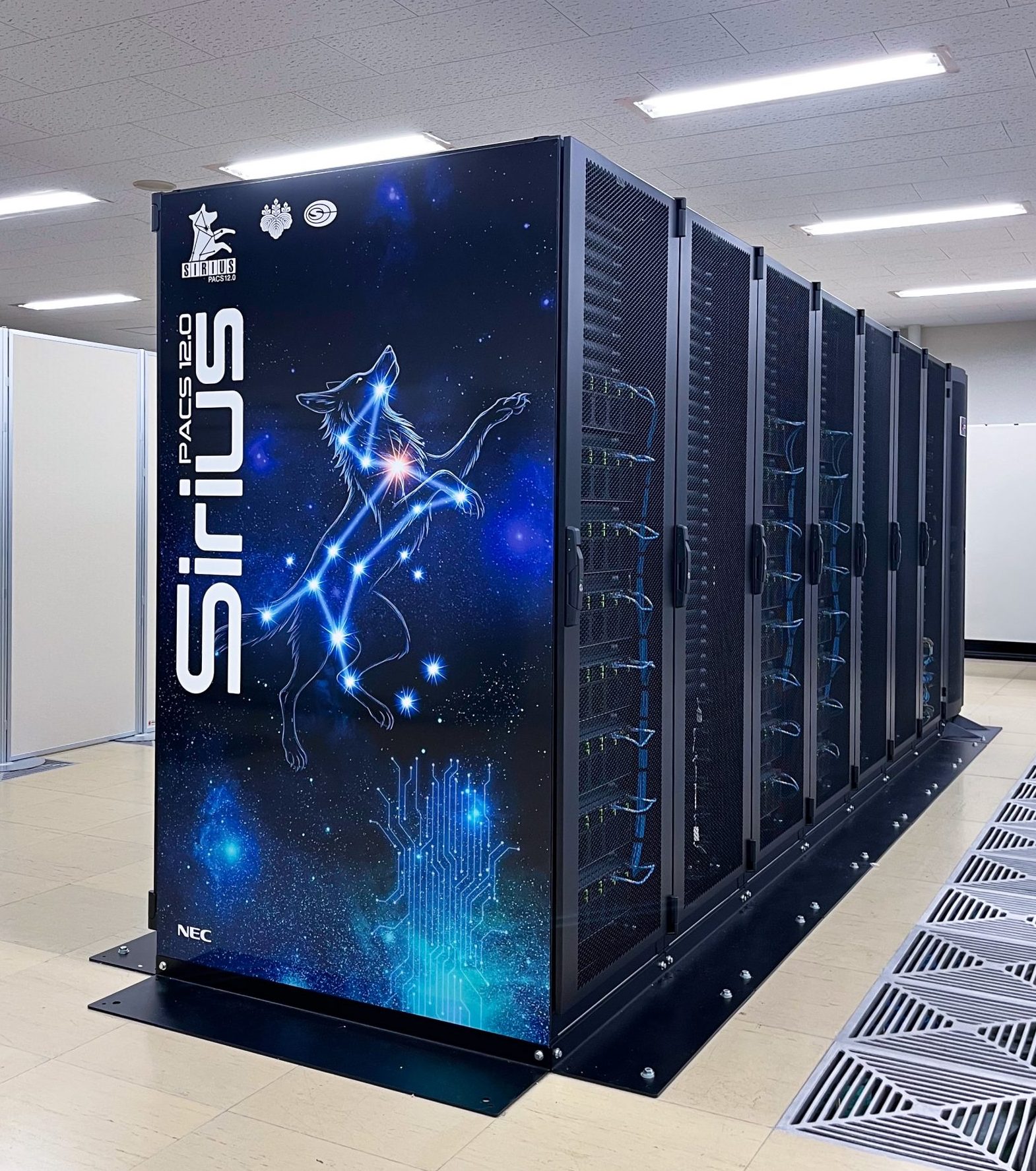
筑波大学計算科学研究センター(以下CCS)は、ユニファイドメモリ型スーパーコンピュータSirius (PACS12.0) の運用を令和8年3月27日より開始します。
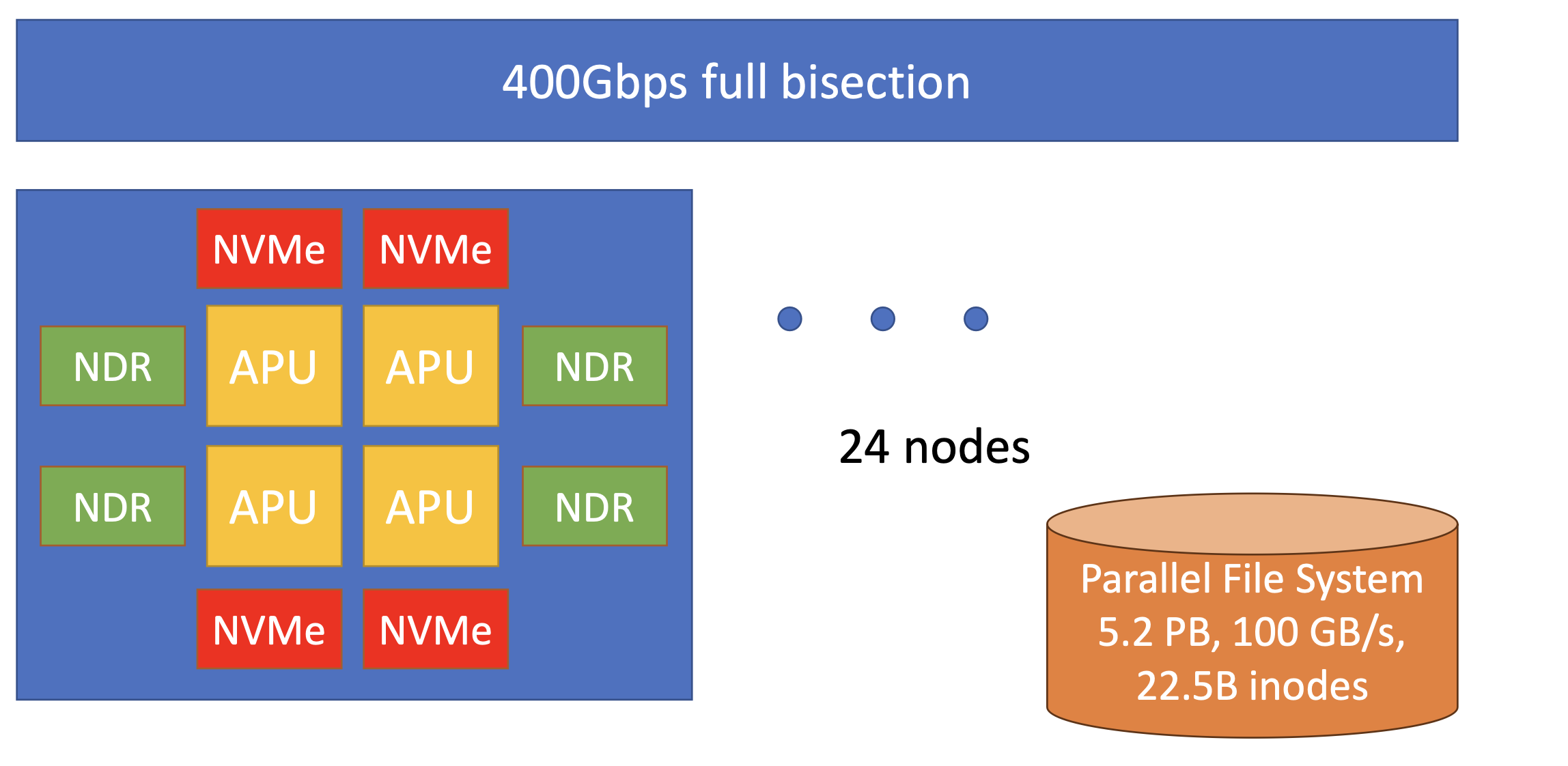
Sirius(PACS12.0)の計算ノードは、4基のAPU(AMD MI300A)で構成されます。APUはCPU(24コアEPYC Zen 4)とGPU(CDNA3)と128GBのHBM3高バンド幅メモリで構成され、CPUとGPU間のメモリ転送が不要となります。これにより飛躍的な演算効率の向上が期待され、またGPUによる最適化のコストが大幅に低下します。4基のAPUで倍精度浮動小数点理論ピーク性能は496TFlops、HBM3の容量は512GBとなります。加えて、計算ノードには4基の3.84TB PCIe Gen5 NVMe SSDが搭載され、大規模データ・ハイパフォーマンスコンピューティング・AI・大規模言語モデルなどの要求にこたえます。Siriusは24ノードで構成され、全体の倍精度浮動小数点理論ピーク性能は11.9PFlopsです。また、各計算ノードは4本のInfiniBand NDR(400Gbps)で接続されています。5.2PBの並列ファイルシステムにより大規模データを高速にアクセスできます。
CCSで2022年から運用されているビッグメモリスーパーコンピュータPegasusとSiriusの並列ファイルシステムはお互いにInfiniBandで接続され高速アクセス可能です。構成の異なる2システムを相互接続して活用することで、タイプの異なるジョブの実行を最適化することが可能です。
CCSは、学際共同利用プログラムや産業利用・一般利用プログラム、国内の大学や研究機関が参画する革新的ハイパフォーマンス・コンピューティング・インフラ(HPCI)などの枠組みを通して、3月27日よりSirius (PACS12.0) の計算資源を広く供し、計算科学・計算機科学・産業の発展に寄与します。
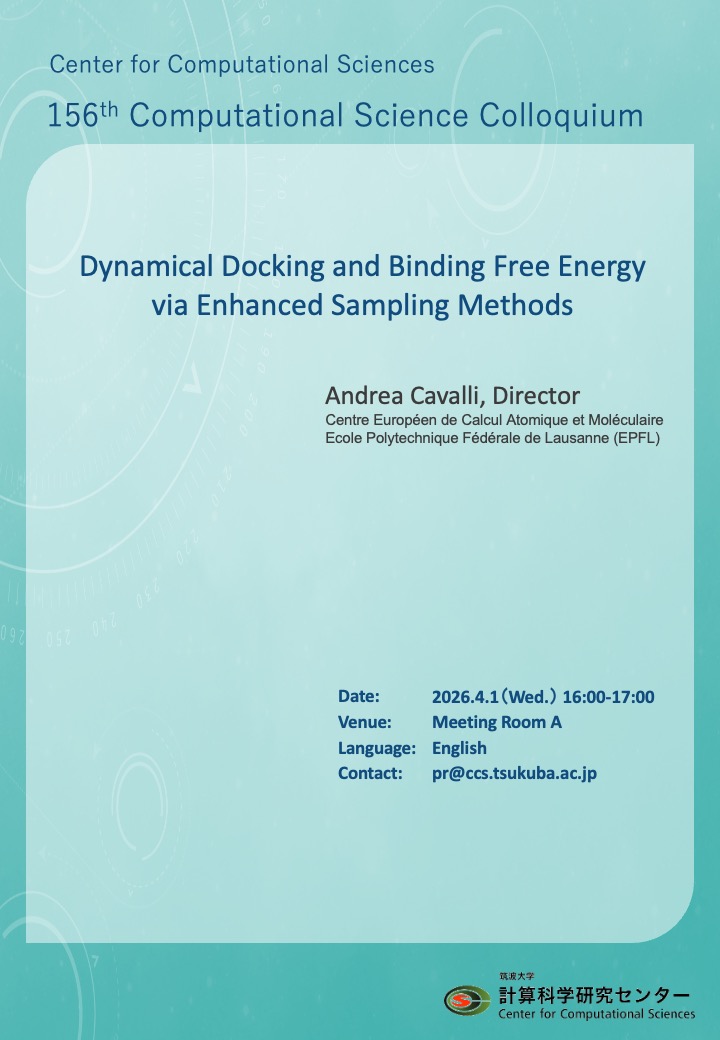
第156回計算科学コロキウムを開催いたします。多数のご来聴をお待ちしております。
講演タイトル:Dynamical Docking and Binding Free Energy via Enhanced Sampling Methods
講師:Andrea Cavalli, Director, Centre Européen de Calcul Atomique et Moléculaire
Ecole Polytechnique Fédérale de Lausanne (EPFL)
日時:2026年4月1日(水) 16:00-17:00
場所:計算科学研究センター 会議室A
Affiliation:
Center for Computational Sciences, University of Tsukuba (Division of Particle Physics)
Research field, Content of work:
In accordance with the research plan of the COI-NEXT program, “Sustainable AI Enabled by the Co-creation of Quantum Software, HPC, and Simulation Technologies” (Principal Investigator: Synge Todo, The University of Tokyo; Project Period: October 2022 – March 2032), the selected candidate will engage in the subproject titled “Quantum-Classical Hybrid Algorithms Based on Quantum Embedding.” In collaboration with Shinichiro Akiyama (University of Tsukuba), the candidate will work on the development of quantum information compression techniques leveraging tensor networks, as well as the study of quantum-classical hybrid algorithms utilizing tensor network methods for fermionic systems, among other related topics.
Starting date:
As soon as possible after a hiring decision is made (negotiable).
Terms of employment:
Full-time position with possibility of renewal annually, up until March 31, 2031, upon evaluation of the progress.
Annual Salary:
Working Days and Hours:
Qualifications:
An applicant needs to have a Doctoral Degree or Ph. D at the start of employment.
Application materials:
Selection process:
After screening the application documents, qualified applicants will be invited to have an online interview in Japanese or English.
Selection period:
Until the position is filled
Application submission:
Please indicate “Application for a Postdoctoral Position in Particle Physics” in the subject line and submit a password-protected ZIP file containing documents 1)–8) in PDF format via email to: application-pp[at]ccs.tsukuba.ac.jp (please replace “[at]” with “@”). The password for the ZIP file should be sent separately to: akiyama[at]het.ph.tsukuba.ac.jp (please replace “[at]” with “@”).
If the total file size exceeds 10 MB, please contact the contact person listed below in advance. Please use “Application Documents for SQAI Researcher Position” as the subject line of your email. If you do not receive a confirmation of receipt within two days of submission, please follow up with the contact person below.
Contact Information:
Shinichiro Akiyama
Division of Particle Physics
Center for Computational Sciences
University of Tsukuba
Tel: +81-29-853-6487
Email: akiyama[at]het.ph.tsukuba.ac.jp ([at] should be replaced by @)
Miscellaneous:
○公募人員: 研究員 1名
○所属組織:計算科学研究センター(素粒子物理研究部門)
○専門分野:COI-NEXT「量子ソフトフェアとHPC・シミュレーション技術の共創によるサスティナブルAIが拓く未来」(代表:藤堂眞治(東大)、研究期間:2022年10月〜2032年3月)の研究計画に則り、サブ課題「量子埋め込みに基づく量子古典融合アルゴリズム(量子埋め込み)」に従事する。当該分野の秋山進一郎(筑波大)と協力し、テンソルネットワークを駆使した量子情報圧縮技術の開発、フェルミ粒子系向けのテンソルネットワーク法を活用した量子・古典融合アルゴリズムの研究、などに取り組む。
○着任時期:決定後できるだけ早い時期(応相談)
○任期:年度更新、最長2031年3月31日まで
○給与等:
・年収450万円〜550万円程度、年俸制(給与等雇用条件は本学の規定による)。
候補者の職務経験等を加味し、本学規程に基づいて号俸を決定。
・通勤手当(本学の規定により支給)
・文部科学省共済組合(年金、医療)に加入
・労災保険、雇用保険適用あり
○勤務日:
・週5日(月~金曜日)8:30-17:15(休憩時間12:15-13:15)
・休日 土曜日、日曜日、国民の祝日及び 12 月 29 日~1 月 3 日
※原則、専門業務型裁量労働制(みなし労働1日7時間45分)が適用されます。
○応募資格: 博士の学位を有する方もしくは着任時期までに取得見込の方
○提出書類:
1)履歴書(写真貼付)
2)全業績リスト(査読論文とその他を区別すること)
3)主な論文別刷(3編以内、コピー可、各1部)
4)これまでの研究の概要(最大2000字程度)
5)着任後の研究に関する抱負(最大2000字程度)
6)本人についての意見を求め得る方2名の氏名及び連絡先
7)特定類型自己申告書(本学所定様式https://www.ccs.tsukuba.ac.jp/reqdocuments/)
8)EU―般データ保護規則(GDPR)に基づく個人データの取扱い及び域外移転に関する同意書(※欧州経済領域の構成国及び英国在住者のみ必ず提出、本学所定様式 https://www.ccs.tsukuba.ac.jp/reqdocuments/)
○選考方法: 提出書類に基づいた書面選考を実施し、通過者は日本語または英語でオンライン面接を行います。
○応募期間:適任者の採用が決まるまで
○応募方法: 提出書類1)−8)のPDFファイルをzipファイルにまとめてパスワードをかけ、電子メールの添付ファイルとして、下記のアドレス
application-pp[at]ccs.tsukuba.ac.jp([at]を@に置き換える)
にお送りください。zipファイルのパスワードは、別途下記のアドレス
akiyama[at]het.ph.tsukuba.ac.jp([at]を@に置き換える)
にお送りください。ファイルサイズの合計が10MBを超える場合は、問合せ先に連絡してください。メールの件名は、「SQAI研究員応募書類」としてください。メール送信後,2日以内に受領確認のメールが届かない場合は、問い合わせ先に連絡してください。
○問合せ先:
筑波大学計算科学研究センター素粒子物理研究部門 秋山進一郎
Tel: 029-853-6487
Email: akiyama[at]het.ph.tsukuba.ac.jp([at]を@に置き換える)
○その他:
筑波大学計算科学研究センター(以下本センター)では、JCAHPC が運用するスーパーコンピュータ Miyabi(Miyabi-G: 1,120 ノード、GH200、78.8 PFLOPS, Miyabi-C: 190 ノード、Xeon CPU Max 9480、1.3 PFLOPS)及び本センターが運用するビッグメモリスーパーコンピュータ Pegasus (150 ノード、SPR、H100、不揮発性メモリ、8.1 PFLOPS) 、ユニファイドメモリスーパーコンピュータ Sirius (PACS12.0)(24 ノード、4×MI300A、11.9 PFLOPS)について、 Miyabi の 4%、 Pegasus、 Sirius の 10%を目安とした計算機資源を、 全国共同利用機関における社会貢献の一環として計算科学/工学、AI for Science/Engineering の推進のため産業利用に供することといたします。
応募に際しては以下のページをご確認ください。
筑波大学計算科学研究センター生命科学研究部門では、山口兆先生の特別講義を開催します。
お気軽にご参加ください。
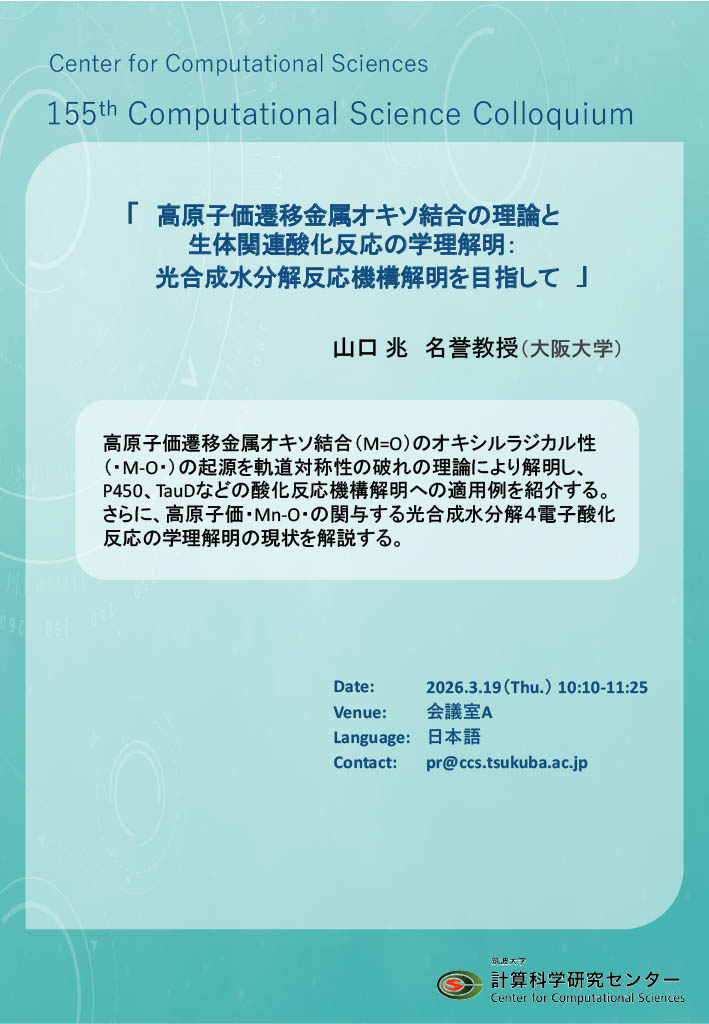
題目:高原子価遷移金属オキソ結合の理論と生体関連酸化反応の学理解明:光合成水分解反応機構解明を目指して
講師: 山口 兆 先生(大阪大学量子情報・量子生命研究センター(QIQB))
日程:2026年3月19日(木)10:10~11:25(2限目)
場所:計算科学研究センター 会議室A
概要:高原子価遷移金属オキソ結合(M=O)のオキシルラジカル性(・M-O・)の起源を軌道対称性の破れの理論により解明し、P450、TauDなどの酸化反応機構解明への適用例を紹介する。さらに、高原子価・Mn-O・の関与する光合成水分解4電子酸化反応の学理解明の現状を解説する。
対象:理工学群および生命環境学群の学部生、大学院生、研究員、教員
世話人:庄司 光男
2026年3月16日
国⽴⼤学法⼈筑波⼤学
国⽴⼤学法⼈茨城⼤学
国⽴⼤学法⼈神⼾⼤学
国⽴⼤学法⼈東海国⽴⼤学機構名古屋⼤学
学校法⼈沖縄科学技術⼤学院⼤学
多くの光合成細菌にとって酸素は有害ですが、海洋性紅色非硫黄細菌は酸素存在下でも生育できます。この細菌において光合成を担うタンパク質複合体の構造をクライオ電子顕微鏡で観察したところ、新たな膜タンパク質を発見し、酸素存在下でも効率よくエネルギー変換できる仕組みの一端を解明しました。
光合成細菌は光合成の際に酸素を発生しませんが、太陽光エネルギーを高効率で化学エネルギーへ変換する能力を持ちます。また、植物が利用しない近赤外光を利用でき、淡水や海水、温泉など多様な環境に適応しています。中でも海洋性紅色非硫黄細菌 Rhodovulum sulfidophilum は、酸素存在下でも高い環境耐性を持つモデル生物です。しかし、その光捕集・エネルギー変換を担うタンパク質LH1-RC複合体が高効率な光合成を実現する仕組みは未解明でした。
本研究では、クライオ電子顕微鏡を用い、1.8 Åという極めて高い分解能でLH1-RC複合体を解析し、未知の膜タンパク質protein-3hを同定しました。さらに、この膜タンパク質の近傍には、ヘム(鉄を中心に持つ環状分子)に結合していない孤立した鉄が存在することを明らかにし、この鉄が電子伝達の中継点として機能する可能性を示しました。これらの知見は、光合成の理解を深めるとともに、遺伝子改変によるバイオテクノロジー応用や、硫化水素を含む排水処理など環境インフラ維持への貢献につながると期待されます。
Anyone can do dynamic docking, watching molecules bind in motion.
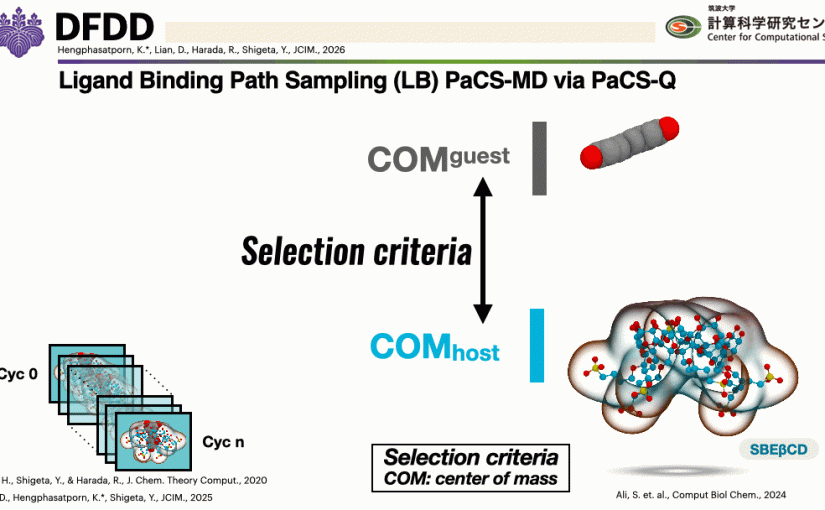
Researchers at the Center for Computational Sciences, University of Tsukuba, have developed an accessible platform to overcome the limitations of conventional static docking simulations, offering new avenues for education, training, and reproducible research in molecular recognition and supramolecular chemistry. Their Distance-Guided Fully Dynamic Docking (DFDD) platform is a cloud-ready simulation framework that enables students and researchers to explore dynamic docking, visualize molecular binding in motion, and understand how host-guest crystal structures emerge from molecular interactions.
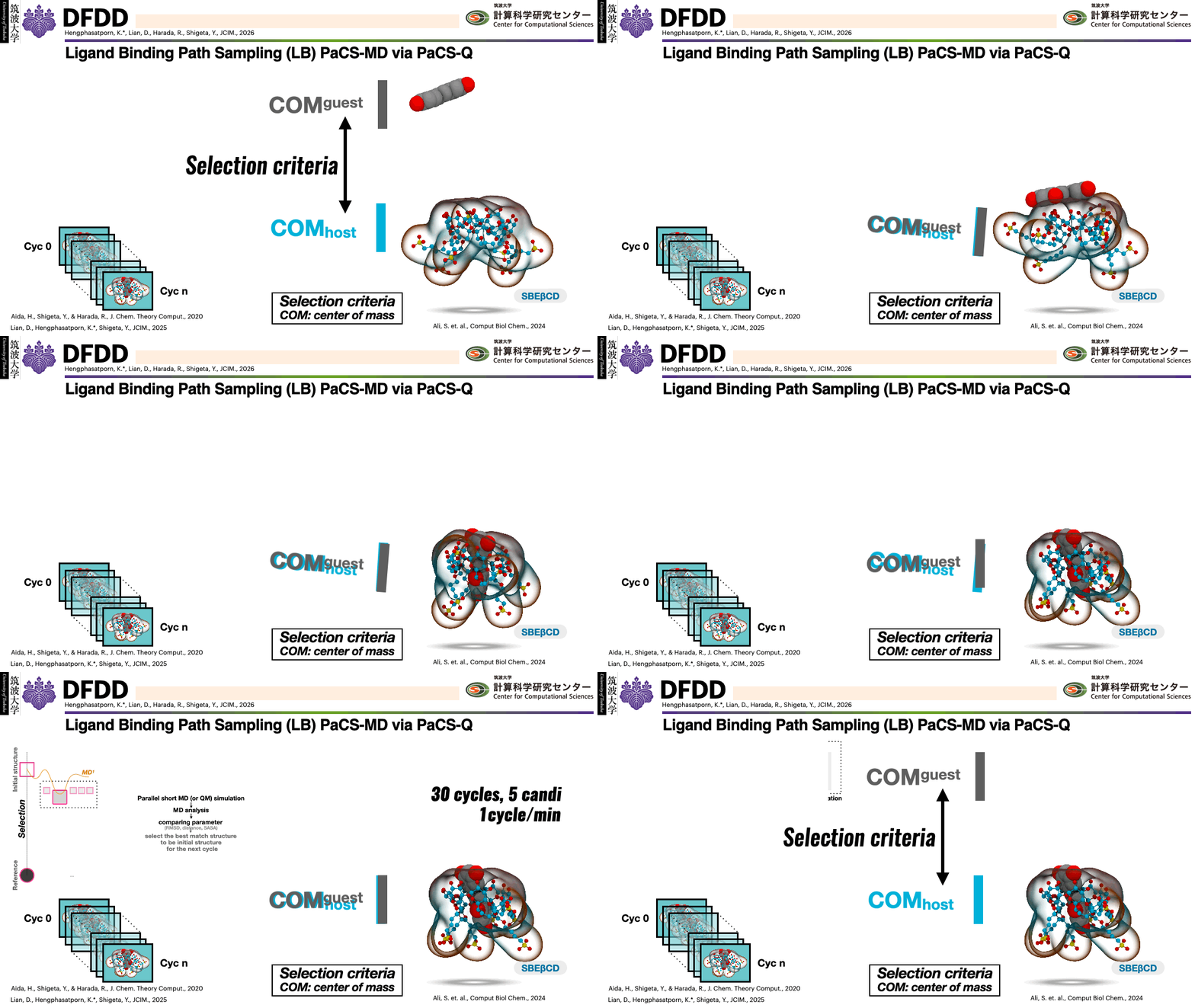
Tsukuba, Japan—Understanding how molecules bind is central to chemistry, biology, and drug design. Nevertheless, most existing tools provide either static snapshots or require computational resources beyond the reach of many researchers and students. Molecular recognition is driven by continuous motion, with flexibility and solvent-mediated interactions playing key roles. However, molecular binding is often interpreted from static crystal structures in conventional docking methods, which typically treat molecules as rigid objects, resulting in many binding pathways remaining poorly captured. While the classical molecular dynamics (cMD) simulations can describe these continuous processes, their high computational cost and limited reproducibility constrain their widespread use.
This work demonstrates how realistic binding pathways and crystal-like structures can be accurately captured using short, reproducible simulations that run on accessible cloud platforms, also in the tablet, offering a practical framework with immediate applicability to learning, teaching, and research. Distance-Guided Fully Dynamic Docking (DFDD) reproducibly recovers binding structures that closely match experimentally determined crystal structures, while also revealing transient configurations that are inaccessible using static docking. DFDD achieved faster convergence, higher reproducibility, and substantially reduced computational effort compared to cMD simulations initiated from unbound states.
DFDD eliminates the need for specialized hardware or complex software installation. It is designed to run on widely accessible cloud platforms, such as Google Colab. By bridging static structural models and fully dynamic simulations, DFDD provides a practical educational and research framework, making dynamic docking accessible to all. With DFDD, everyone can watch molecules bind as crystal-like structures emerge from molecular motion. DFDD is freely available at: https://github.com/nyelidl/DFDD.
###
This research was supported by JSPS KAKENHI Grant Numbers 21H05269 and 24K20888, the JST-CREST project (Grant Number JPMJCR20B3), and the Center for Quantum Information and Life Science (QiLS) at the University of Tsukuba.
Assistant Professor HENGPHASATPORN Kowit
Assistant Professor Lian Duan
Associate Professor HARADA Ryuhei
Professor SHIGETA Yasuteru
Center for Computational Sciences, University of Tsukuba
GitHub: https://github.com/nyelidl/DFDD
Google Colab: https://colab.research.google.com/drive/1FfTuVSykgsstjzN0nJN0ZQo1_tw0WXSe?usp=sharing
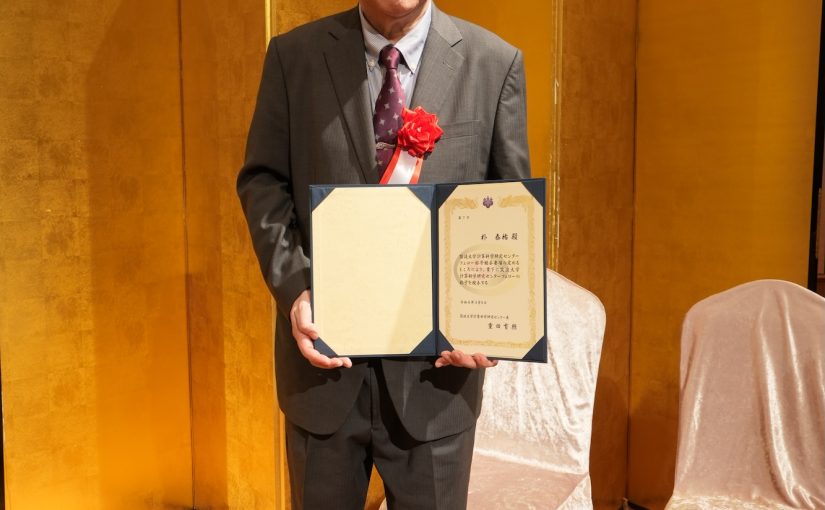
去る3月9日、本年度末で定年退職される朴泰祐教授(高性能計算システム研究部門)へ、計算科学研究センターフェローの称号が授与されました。
朴教授は、計算科学研究センターの前身である計算物理学研究センターの創設時より、センターで開発・運用された数々のスーパーコンピュータの研究開発に尽力され、高性能計算分野における教育・研究の進展に多大な貢献をされました。また、宇宙、物性、気象などのアプリケーション分野との共同研究や多くの国際的な共同研究を推進し、幅広い学術分野の発展に寄与されました。
計算科学研究センターにおいては、2019年度から2024年度までの6年間にわたりセンター長を務め、センターの管理運営ばかりでなく、日本の計算科学の推進において多大な貢献をされました。これらの功績により、計算科学研究センターからフェローの称号を授与されました。
■筑波大学計算科学研究センター フェローの一覧
http://www.ccs.tsukuba.ac.jp/ccs_introduction/teacher/fellow
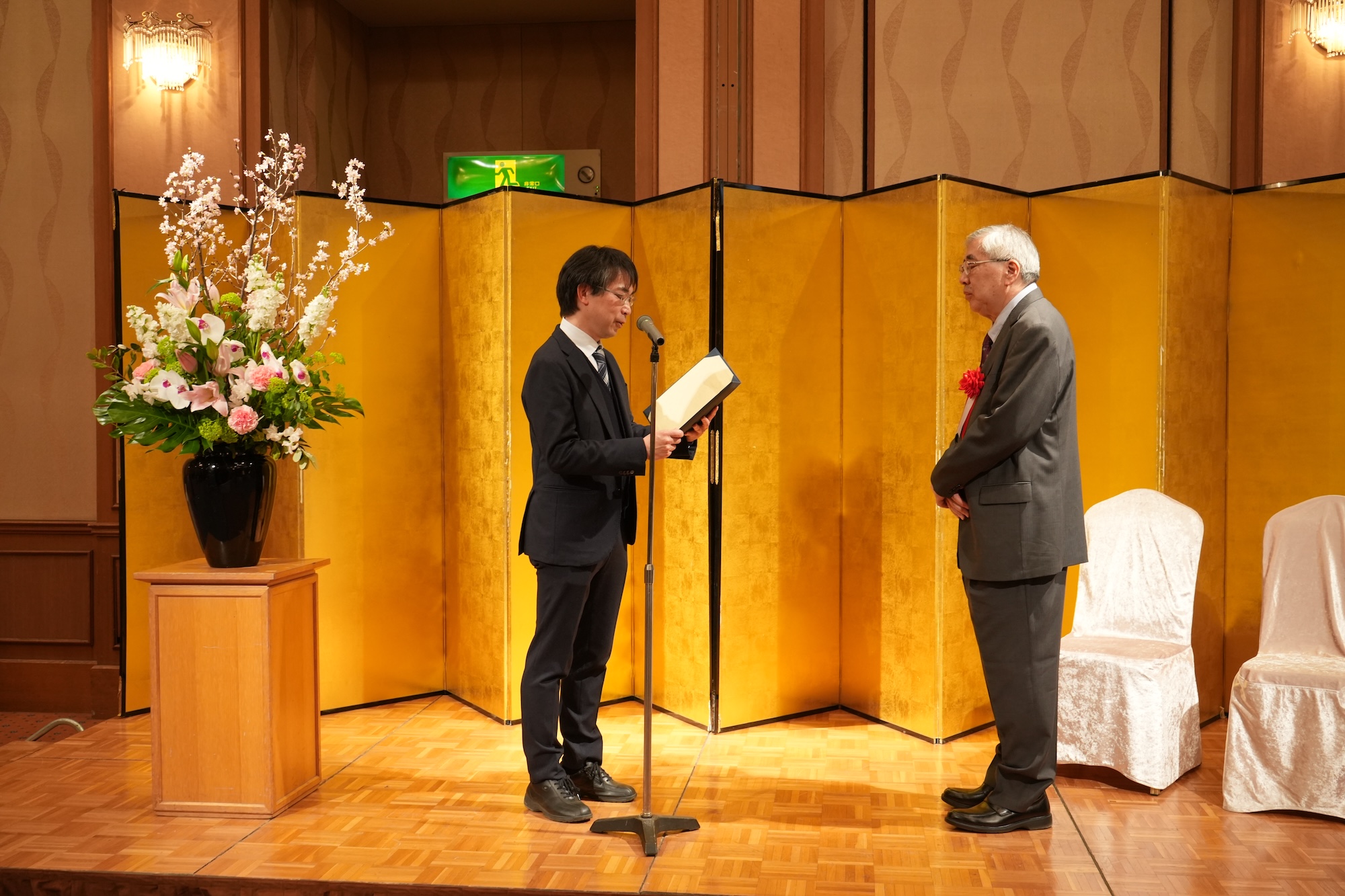 重田センター長(左)より朴教授へ計算科学研究センターフェローの賞状を授与
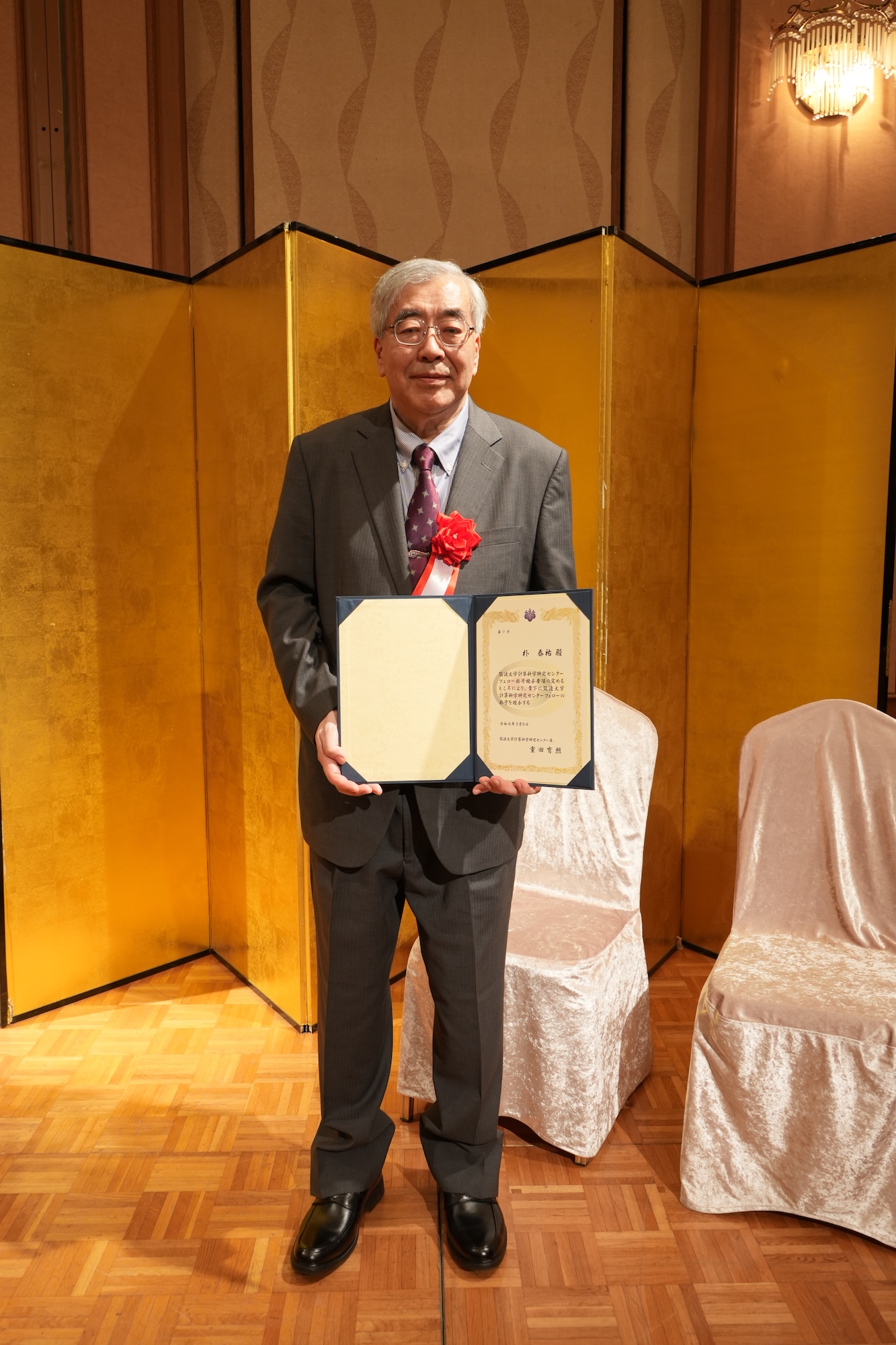 計算科学研究センターフェローの賞状を手にする朴泰祐教授
今年の EPCC-CCS workshop 開催地は、エジンバラ大学(EPCC)です。
Date: March 11th (Wed) – 12th (Thu), 2026
Venue: EPCC, the University of Edinburgh
| DAY 1 | Teaching Room 13,Teviot Medical School | |
| start | Speaker | Title |
| 9:30 | Coffee, welcome and introduction | |
| 10:00 | Yoshinari Kameda | Computational Vision Media for Real-World Computational Imformatics |
| 10:30 | Mark Parsons | EPCC update |
| 11:00 | Miwako Tsuji | Quantum HPC Hybrid Platform in Japan |
| 11:30 | Coffee | |
| 12:00 | Oliver Brown | Quantum Software Lab |
| 12:30 | Hiroyasu Koizumi | Quantum Computing for Natural Language Processing and Sentiment Analysis |
| 13:00 | Lunch | |
| 14:00 | Jano Van Hemert | Edinburgh International Date Facility:flexible storage and compute services for AI and date science |
| 14:30 | Taisuke Boku | Changing Lanes – GPU Computing for HPC/AI and Governmental Support in Japan |
| 15:00 | Julien Sindt | Preserving large-scale geospatial datasets |
| 15:30 | Coffee | |
| 16:00 | Yasuteru Shigeta | Integrated Drug discovery using simulation and machine learning |
| 16:30 | Joe O’Connor | Machine Learning for Smoothed Particle Hydrodynamics |
| 16:45 | Adrian Jackson | Optimizing storage with compiler technologies |
| 17:00 | Close | |
| DAY 2 | Lecture Theatre 3, 40 George Square | |
| start | Speaker | Title |
| 9:00 | Nick Brown | Programmer productivity and performance when using AI accelerators for HPC |
| 9:30 | Ho Hsiao | A Machine Learning Approach for Lattice Gauge Fixing |
| 10:00 | Elia Cellini | Neural and Non-Equilibrium methods for Lattice Gauge Theory |
| 10:30 | Shu Horie | Estimating the Star Formation History of Galaxies Using Diffusion Models |
| 11:00 | Coffee | |
| 11:30 | Jindra Gensior | The impact of different star formation models on galaxy evolution across cosmic time |
| 12:00 | Paul Batholomew | VECTA and CSS |
| 12:30 | Closing remarks and future plans | |
| 13:00 | Lunch | |
| 14:00 | Visit to EPCC Data Center | |
| 16:30 | Close | |
浅野 裕樹 研究員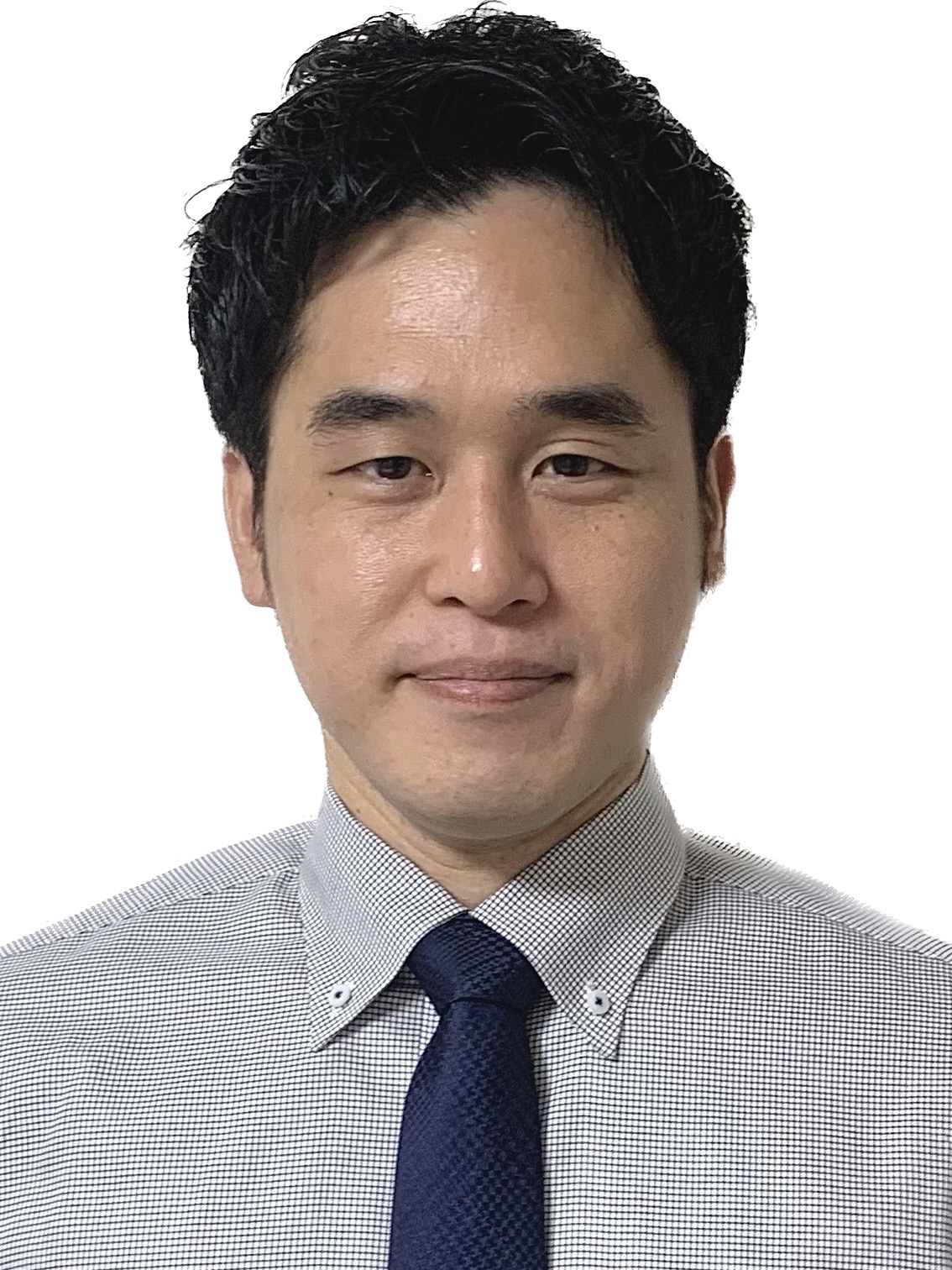
地球環境研究部門
浅野さんは、地球環境研究部門の研究者です。都市気候と山岳気象、この2つを主な専門分野にしながら、近年は理科教育の研究にも励んでいます。幅広い興味関心を持つ浅野さんは、多分野において、さまざまな手法を用いた研究を行ってきました。今回は、その中で特に暑熱分野の研究に注目します。
(2026.2.19 公開)
当センターの日下研究室で開発された都市街区気象モデル「City-LES*」は、都市街区内の気温や風速、表面温度などを詳細に再現することができます。
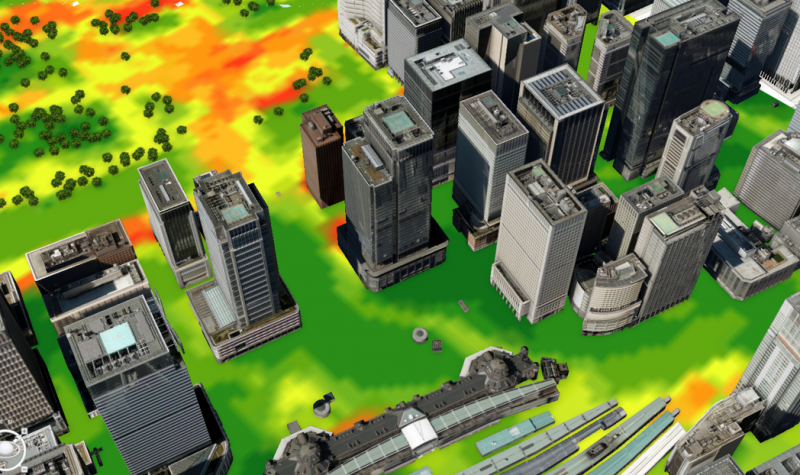
図1:City-LESによってシミュレートされた東京駅周辺の地上気温分布(出典:日下研究室)
しかし、図のような現実の街でCity-LESを利用するには、1つのハードルが存在します。それは、シミュレーションを行う上で必要となる都市の三次元モデルの作成です。具体的には、建物などのデータの取得や処理、LESの実行に至るまでに、GIS(地理情報システム:Geographic Information System)の知識と使用経験が求められ、複雑な工程を踏む必要がありました。
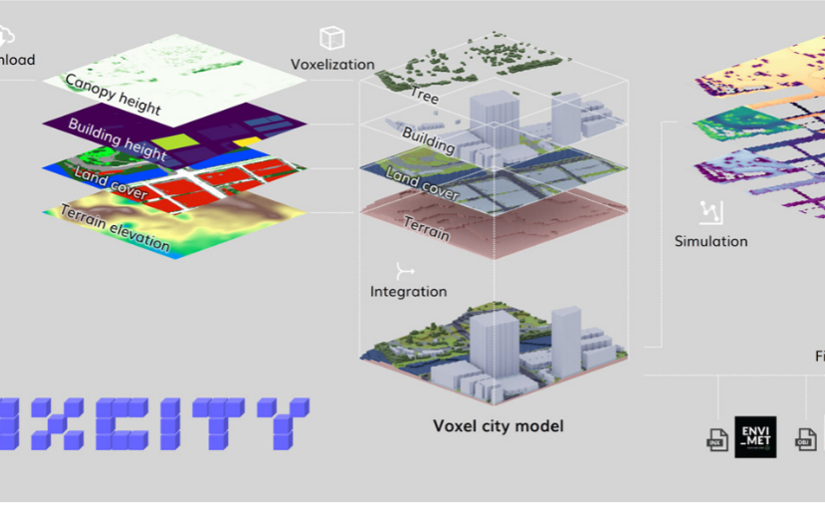
City-LESの利用におけるハードルを下げることは、浅野さんが課題と感じてきた部分でした。その解決の糸口となったのが、竹中技術研究所の藤原邦彦さんが開発した、都市の三次元モデルを生成するPythonパッケージ「VoxCity」です。その大きな特徴は、データの自動取得による利便性と初心者でも扱いやすい操作性の高さにあります。VoxCityの活用により、シミュレーションに必要な土地利用や建物データは、クリック操作で簡単に取り出せるようになりました。都市名や地域を選べば、日本だけでなく世界各国の都市においてもデータ取得が可能となります。
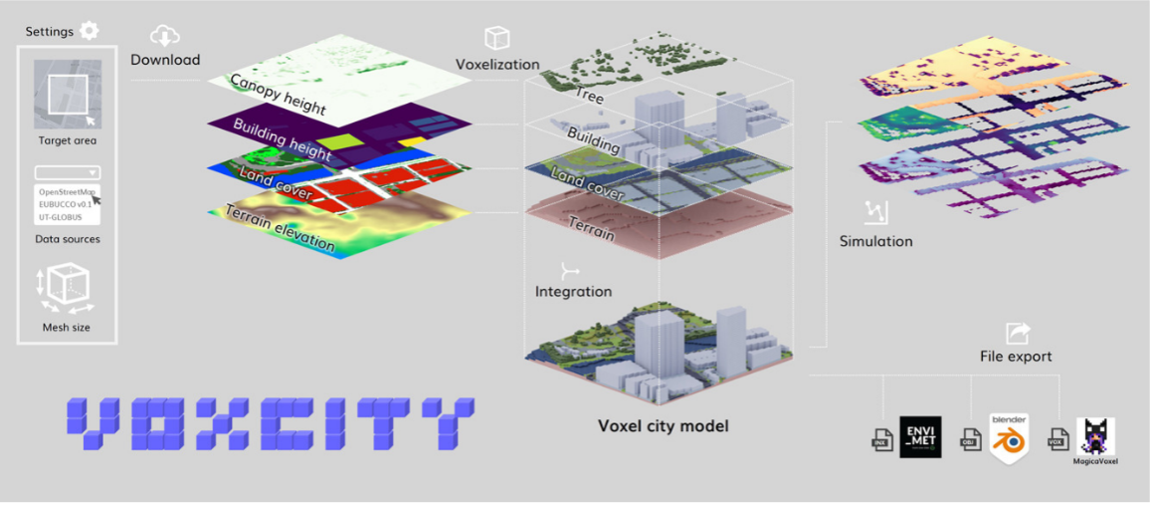
図2:VoxCityによるデータ処理のフロー(出典:Fujiwara et al.(2025))
VoxCityは、現在公開ページから誰でも利用することが可能。https://github.com/kunifujiwara/VoxCity
浅野さんが国際会議で藤原さんの発表を聞いたことをきっかけに、その技術をCity-LESにも応用できるのではないかと思い、声をかけたそうです。その結果、両技術を結びつけ、City-LESの利便性を高める共同開発へと発展しました。今までの複雑な手作業が大幅に削減され、より効率的にシミュレーションを行うことが可能となったのです。浅野さんは、引き続き暑熱環境評価の研究に取り組んでおり、この開発をきっかけにCity-LESのさらなるユーザー拡大を期待しています。
浅野さんは、City-LESなどの数値モデルを用いた研究だけでなく、観測や被験者実験といった、異なる手法での研究も行っています。Asano et al.(2022)では、筑波大学内における被験者実験を通じて、暑い屋外における歩行時間と知的生産性の低下の関係について示しました。実験の結果、被験者の屋外歩行後のテスト正答率は歩く前に比べて3.6%低下しました。また、女性よりも男性で影響が強く見られることや、睡眠時間が短いほど正答率が下がるといった結果も示されています。
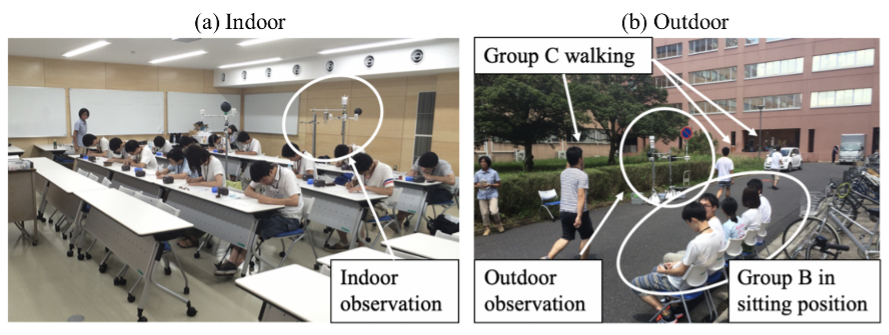 図3:筑波大学内での被験者実験の様子(出典:Asano et al.(2022))
プレスリリース:https://www.ccs.tsukuba.ac.jp/release20220222/
取材を通じて、最先端のシミュレーション実験(モデル)から実証的な実験(観測)まで、浅野さんの取り組む研究アプローチの幅広さが印象的でした。複数の軸を持ちながらも、探究心を持ってそれぞれを極めていこうとする浅野さんの今後の活動に、ますます期待が高まります。
(文・広報サポーター 野本実奈)